
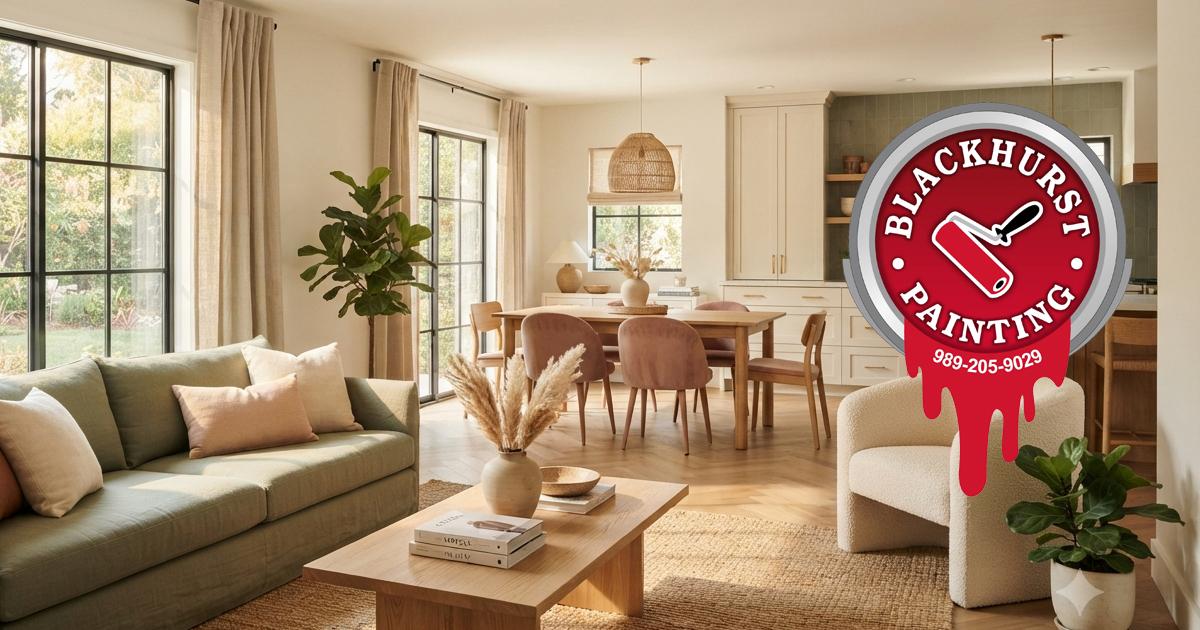

One of the most common challenges Michigan homeowners face when planning a painting project is figuring out how to make their color choices feel intentional and cohesive throughout the entire home. Choosing a single color for one room is manageable enough, but when you start thinking about how your living room connects to the hallway, which flows into the kitchen, and then into the dining area, things can feel overwhelming quickly. The good news is that creating a whole-home color palette is absolutely achievable with the right approach — and the results are worth every bit of thoughtful planning.
At Blackhurst Painting, we work with Michigan homeowners every day to help translate their style and vision into beautiful, lasting paint selections that make sense from room to room. Whether your home is a cozy ranch-style in the suburbs of Grand Rapids or a sprawling colonial closer to Ann Arbor, a unified color palette makes every space feel purposeful rather than pieced together.
Why a Whole-Home Color Palette Matters
When colors throughout your home feel disconnected, the overall effect can be jarring. You might love how a bold navy looks in your home office, but if it clashes with the warm terra cotta in the adjacent hallway, neither space gets to shine the way it should. A whole-home palette solves this problem by establishing a visual thread that ties every room together — even when individual rooms have their own distinct personality.
This doesn't mean every wall in your home needs to be the same shade. In fact, variety is what makes a well-planned palette exciting and dynamic. What matters is that your colors share a common undertone, a compatible mood, or a sense of balance that makes transitions between spaces feel natural and smooth.
The Role of Undertones in Color Cohesion
Undertones are the hidden hues beneath the surface of any paint color, and they play a major role in whether two colors look harmonious or awkward side by side. A warm white, for example, has subtle yellow or pink undertones, while a cool white leans toward blue or gray. If you mix warm and cool tones carelessly throughout your home, even neutrals can end up feeling chaotic. Identifying whether your overall palette leans warm, cool, or neutral from the start is one of the single most important steps you can take when planning your colors.
Consider Your Permanent Elements First
Before you choose a single paint color, take stock of the elements in your home that aren't going anywhere — your flooring, cabinetry, countertops, tile, and major furniture pieces. These fixed elements carry their own undertones and should serve as your starting point. If your hardwood floors have warm amber tones and your kitchen cabinets are a creamy white, your whole-home palette will likely feel most natural when it leans warm and welcoming rather than stark and cool.
Building Your Palette: A Step-by-Step Approach
Creating a whole-home color palette doesn't have to be intimidating. Breaking the process into clear steps makes it much more manageable, and the results will feel far more intentional than if you simply picked colors room by room on a whim.
Start with an Anchor Color
Your anchor color is the one hue that you feel most strongly drawn to — the one you'd be happy seeing every single day. This is often a neutral like a soft greige, a warm white, or a sophisticated taupe, but it can also be a deeper accent tone if you plan to use it thoughtfully. This anchor color will typically appear in your largest or most visible spaces, like your living room or main hallway, and it will inform every other selection you make.
Build Outward with Supporting Colors
Once your anchor color is established, choose two or three supporting colors that complement it. These can be lighter or darker variations of your anchor, or they can be contrasting hues that share a similar undertone family. Think about how your eye will travel through the home — from the entryway down the hall, into the main living areas, and through to the bedrooms. Each color transition should feel like a natural next step rather than an abrupt change.
Designate Accent and Trim Colors
Your trim color is one of the most underestimated elements in a whole-home palette. Keeping your trim color consistent throughout the entire home — whether it's a crisp white, a soft cream, or even a bold contrasting shade — does more to unify your spaces than almost any other single decision. Accent colors, which might appear on a feature wall, built-ins, or a powder room, should feel like intentional highlights rather than random departures from the rest of the palette.
Practical Tips for Michigan Homeowners
Michigan homes face unique conditions that can influence how paint colors look and perform. Our long winters mean many months of low, indirect light, which can make cool colors feel even colder and muted tones feel dull. Our bright summer sun, on the other hand, can wash out very light colors and make them look flat rather than fresh. Keeping these seasonal lighting shifts in mind when planning your whole-home palette helps ensure your colors look great year-round, not just on a sunny day in July.
- Test your colors in multiple lighting conditions. Look at large paint swatches at different times of day and under both natural and artificial light before committing.
- Don't skip the sample stage. Paint large test patches directly on your walls — at least 12 by 12 inches — and live with them for a few days before making a final decision.
- Think about how rooms connect visually. Stand in doorways and consider what you see from each vantage point. Colors that look great in isolation might need adjustment when viewed alongside an adjacent room.
- Limit your palette to a manageable range. Most design professionals recommend choosing no more than three to five distinct paint colors for a whole-home palette, not counting trim and accent choices.
- Factor in your personal style. Whether you lean toward modern minimalism, cozy farmhouse, or traditional elegance, your color palette should feel like an authentic reflection of who you are and how you want to feel in your home.
If you're feeling unsure about where to begin or how to pull it all together, the team at Blackhurst Painting is here to help. We bring years of experience working with Michigan homeowners to select colors that not only look beautiful but also perform well in our unique climate. From the first consultation to the final brushstroke, we're committed to making sure your home feels exactly the way you've always imagined it could.
Ready to start planning your whole-home color transformation? Contact Blackhurst Painting today to schedule a consultation and take the first step toward a home that feels beautifully, completely yours.
