
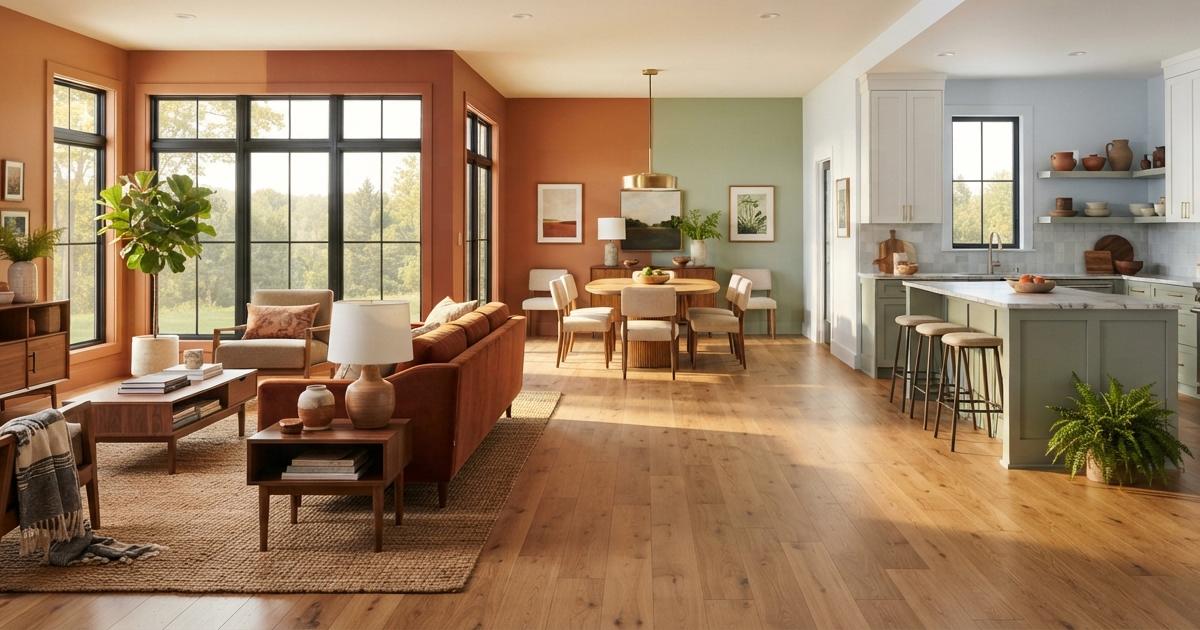

Open floor plans have become a staple of modern Michigan homes. They feel spacious, airy, and social — everything homeowners love. But without walls dividing rooms, creating a sense of purpose and definition in each area can feel surprisingly tricky. The great news is that paint is one of the most powerful tools available for solving exactly this problem, and you do not need to build a single wall to do it.
At Blackhurst Painting, we work with Michigan homeowners every day who want their open-concept living spaces to feel intentional and organized while still flowing beautifully from one zone to the next. Understanding how color works as a spatial divider is a skill we have honed over years of work in Michigan homes, and today we are sharing that knowledge with you.
Why Color Is Your Best Tool for Defining Zones
Before we dive into specific techniques, it helps to understand why color works so effectively as a spatial boundary. Our brains are wired to process visual cues as signals about where we are and what we are supposed to do in a given space. When you walk into a room painted in deep, warm tones, your brain immediately senses coziness and intimacy. When you step into a space with bright, energizing colors, your body responds accordingly.
In an open floor plan, you can use these psychological triggers strategically to tell your brain — and the brains of your guests — where the dining area ends and the living room begins, or where a home office carved out of a corner officially starts. No walls required.
The Power of Undertones
One of the most underestimated tools in color zoning is the use of undertones. Two colors can appear completely different on the surface while sharing a similar undertone — say, a warm beige and a warm terracotta. By choosing colors that share an undertone family, you create zones that feel distinct but still harmoniously connected. This is especially important in Michigan homes where natural light changes dramatically from season to season, shifting how colors read on your walls throughout the year.
Value Contrast and Visual Weight
Value — how light or dark a color is — also plays a major role in how spaces feel. Painting one zone in a lighter, softer hue while using a deeper, richer shade in an adjacent area creates a natural visual boundary that the eye recognizes instantly. This technique works particularly well in Michigan homes where architectural details like ceiling height changes or flooring transitions might already hint at where one space ends and another begins.
Practical Techniques for Using Paint to Divide Spaces
Now that you understand the theory, let us get into the actual techniques that Blackhurst Painting uses to help Michigan homeowners achieve a beautifully zoned open floor plan.
Ceiling Color Changes
One of the most elegant and underused methods of defining zones is painting the ceiling. By using a different ceiling color over a kitchen island versus the dining table area, you create an invisible but psychologically powerful boundary. This works especially well in Michigan homes with taller ceilings where you have plenty of visual real estate to work with. A warm, slightly tinted ceiling over a breakfast nook can make that corner feel like its own cozy retreat, even without a single wall separating it from the kitchen.
Feature Walls That Anchor a Zone
Painting one wall within a zone a noticeably different or bolder color helps anchor that space visually. For example, painting the wall behind a sofa a deep slate blue communicates to anyone entering the room that this is the living area. It gives the space a focal point and a sense of boundary without any physical partition. When done thoughtfully, these feature walls can also connect to adjacent zones through complementary colors, creating a cohesive whole that still celebrates individuality in each area.
Color Blocking with Architectural Elements
Many Michigan homes have subtle architectural cues like built-in shelving, column details, or changes in flooring. Painting these elements in a coordinating but distinct color amplifies their role as natural zone dividers. A bookshelf painted in a contrasting tone, for instance, immediately reads as a room divider, especially when the wall behind it carries a different hue from the walls of the adjacent space.
Common Mistakes to Avoid When Using Color as a Zone Divider
We have seen many homeowners attempt color zoning on their own and run into a few predictable pitfalls. Being aware of these mistakes can save you a lot of frustration and costly repaints.
- Choosing colors that clash rather than contrast: There is a big difference between intentional contrast and colors that fight each other. Always test your color combinations in the actual light of your Michigan home before committing.
- Ignoring the flooring: Your floor color has a significant influence on how wall colors read. Always factor in your existing flooring tone when choosing zone colors.
- Using too many competing colors: More is not always better. Using more than three or four distinct colors across an open floor plan can feel chaotic rather than intentional. A unified palette with thoughtful variation is always more elegant.
- Forgetting about natural light shifts: Michigan's natural light changes not just seasonally but throughout the day. A color that looks perfect in morning light might feel entirely different by evening. Always view your paint samples at multiple times of day.
- Skipping the primer: Especially when making significant color changes between zones, proper priming ensures that your colors read true and that coverage is complete. Skipping this step almost always leads to disappointment.
Why Professional Help Makes a Difference
Color zoning in an open floor plan sounds straightforward in theory, but the execution requires a trained eye, precision painting skills, and deep knowledge of how paint behaves in real homes. Sharp, clean lines between colors, proper transitions at architectural features, and flawless coverage in each zone all require professional-level skill. At Blackhurst Painting, we bring that expertise to every project, helping Michigan homeowners achieve results that look intentional, beautiful, and lasting.
Let Blackhurst Painting Help You Find Your Home's Visual Language
Every Michigan home has its own personality, its own light, and its own layout challenges. There is no one-size-fits-all formula for color zoning — it requires listening to the space and responding thoughtfully. That is exactly what we do at Blackhurst Painting. Whether you are working with a sprawling open-concept ranch or a more compact urban home, our team has the experience and the passion to help you use color to its fullest potential.
If you are ready to explore what paint can do for your Michigan home's layout and flow, we would love to start a conversation. Reach out to Blackhurst Painting today to schedule a consultation, and let us help you discover the hidden language of color in your own home.
